
 +351 963 509 874
 mail@funpadel.pt


 3.14
 Bestseller



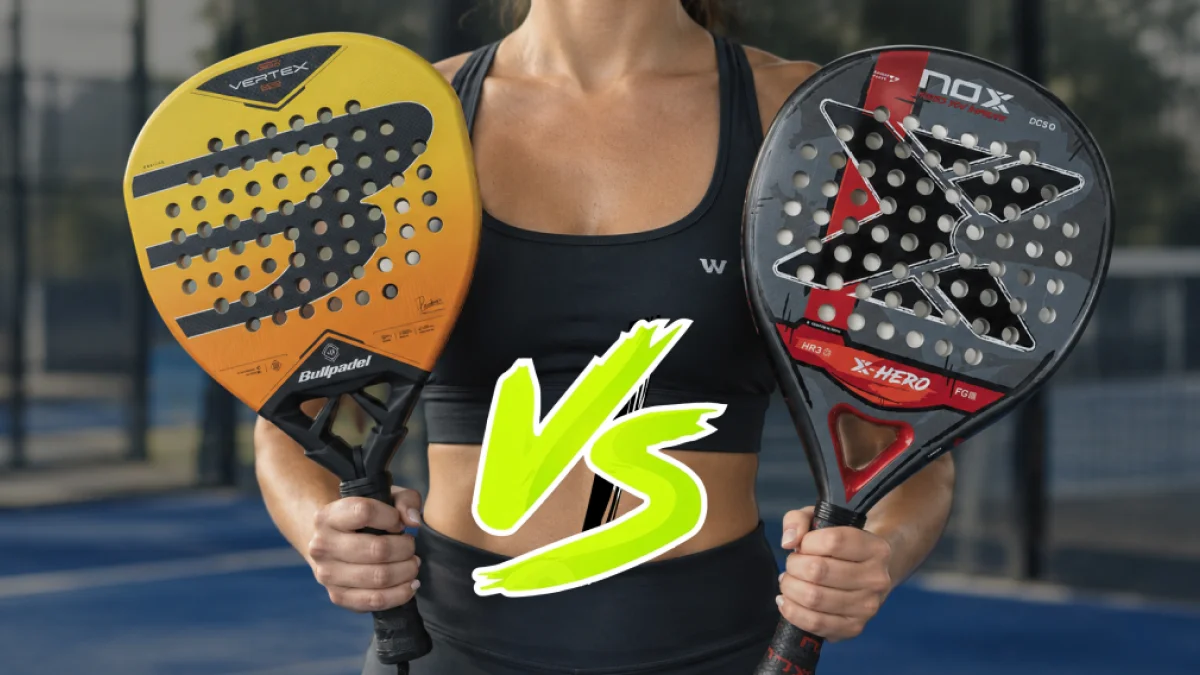
Expensive vs Cheap Padel Rackets
 5 min
- What Distinguishes High-End Padel Rackets from More Affordable Models?
- Shape, Weight, and Balance: What Should You Keep in Mind?
- When Is It Worth Investing More in a Padel Racket?
- How to Choose a Padel Racket Without Overspending?
- Ultimately, Does an Expensive Padel Racket Pay Off for Casual Players?
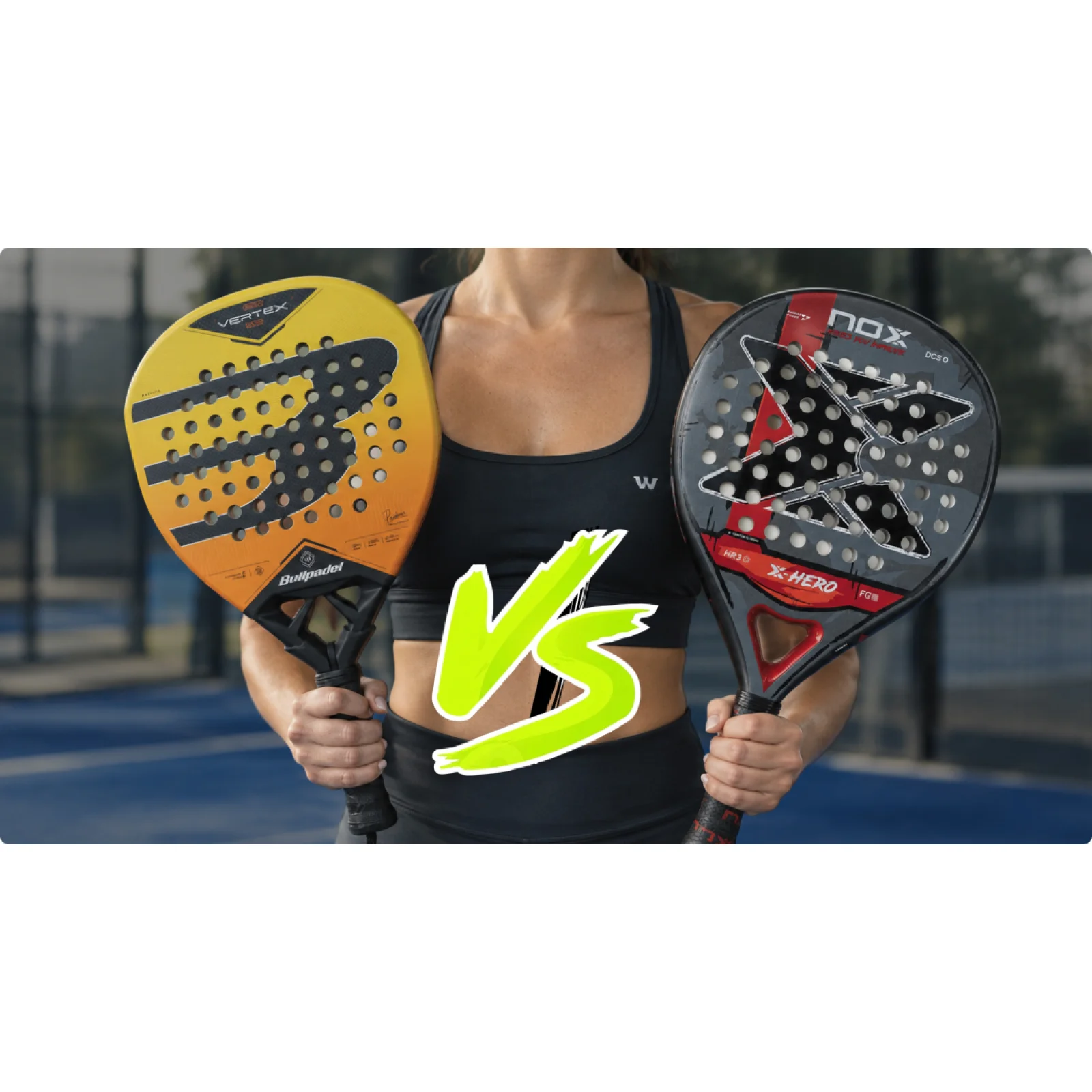
If you play padel once or twice a week, is it really worth investing in a high-end padel racket, or is a more affordable model enough? The answer depends on your playing level, personal preferences, and the features you truly value on the court.
A more expensive racket may offer specific materials and advanced technologies, but that doesn't mean it’s the best choice for everyone. For occasional players, comfort, control, and maneuverability are often much more important than maximum power or cutting-edge materials.
What Distinguishes High-End Padel Rackets from More Affordable Models?
One of the main differences lies in the materials and construction process. High-end rackets frequently use various types of carbon fiber, whereas many entry-level models rely on fiberglass or composite material blends.
The core also heavily influences the playing feel. The density and hardness of the EVA rubber, for instance, affect how the racket responds to impact and the overall sense of control. However, the final performance depends on the combination of the core, the faces, the tubular structure, and the overall design.
In practical terms, a stiffer racket can offer a more direct response on certain shots, but it also demands a more consistent and refined technique. A more flexible model can provide a different impact feel and assist in defensive situations, though this varies from player to player.
For beginners or those who play casually, there is no need to pay for technologies you cannot yet leverage. When comparing padel rackets, it is smarter to analyze materials, shape, weight, and balance rather than choosing based on price alone.
Shape, Weight, and Balance: What Should You Keep in Mind?
The shape of the racket influences weight distribution, the size of the sweet spot, and how easily you can execute different shots. There are four common categories on the market: round, diamond, teardrop, and hybrid.
- Round Shape: Typically offers a wide sweet spot and facilitates control, making it an attractive option for beginners and players who prioritize precision.
- Diamond Shape: Tends to favor power on offensive smashes, but requires greater precision when contacting the ball.
- Teardrop Shape: Seeks a balance between control and power, adapting well to versatile playing styles.
- Hybrid Shape: Combines characteristics from different geometries. Its behavior depends on each specific model's design, so it should not be automatically confused with a teardrop shape.
Balance also deserves attention. A low-balance racket tends to be easier to maneuver, while a high-balance setup can boost power, although it can make certain rapid movements more demanding.
Weight is another crucial factor. A lighter racket facilitates quick movements and directional changes, but stability and the physical effort required also depend heavily on balance, technique, and your physical profile.
If you play occasionally, a round or hybrid racket with a comfortable weight and balance can be a great starting point. Ultimately, the ideal choice depends on how the racket feels in your hand during play.
When Is It Worth Investing More in a Padel Racket?
A high-end racket can make sense in certain situations, even for those who don’t play every day. The key is to figure out whether its features match your specific needs.
Consider investing more if:
- You already have a consistent technique and are looking for a specific performance response in attacking shots.
- You feel your current racket no longer matches your evolving playing style.
- You value specific construction traits, premium materials, or a particular impact feel.
- You have tested different models and identified concrete advantages in a higher-tier option.
On the other hand, if you are still developing your technique or play only once or twice a week, an entry-level or mid-range racket will perfectly meet your needs.
Price alone does not guarantee greater comfort, better control, or superior durability. These aspects depend on the model's design, how you use it, and how well you care for your equipment.
How to Choose a Padel Racket Without Overspending?
Before buying, define what matters most to you: gaining better ball control, building confidence on defensive shots, easing movement near the net, or generating more power on overheads.
Next, compare models based on four criteria:
- Comfort: The racket should allow you to play without a constant sense of excessive arm fatigue.
- Control: You should be able to direct the ball consistently, relative to your technical level.
- Maneuverability: Weight and balance must allow you to react quickly during rapid rallies.
- Budget: Choose a price range compatible with your playing frequency and the features you truly require.
Whenever possible, test different models before making a decision. To compare options easily, you can explore the Fun Padel catalog — a specialized European marketplace featuring a wide selection of padel rackets for all experience levels, backed by fast EU-wide shipping and free delivery on orders over €99.
Ultimately, Does an Expensive Padel Racket Pay Off for Casual Players?
Not always. A high-end racket can justify the investment when it offers features tailored to your needs. But for those who play occasionally, a more accessible model can deliver ample comfort, control, and a thoroughly satisfying playing experience.
The best choice isn’t necessarily the most expensive racket — it’s the one that fits your level, your style of play, and your budget.

Be the first to know what's happening in padel
Subscribe for gear guides, playing tips and the latest padel news — straight to your inbox.
 Vitalii Grigorovich
 Fun Padel Team
 Fast delivery: 1–2 business days
 The best prices on the web
 30 days to return the product
 Helpful customer support
