
 +351 963 509 874
 mail@funpadel.pt




Asics vs Munich: Best Shoes
 4 min
- Asics: The Gold Standard in Cushioning and Comfort
- Standout Technologies: Gel and Lateral Stability
- What Type of Player Are They Recommended For?
- Munich: Innovation, Design, and Superior Resistance
- Sole Durability and Structural Reinforcements
- The Munich Player Profile
- Direct Comparison: Asics vs. Munich
- Grip and Sole Type (Clay vs. Omni)
- Price-Quality Ratio
- Fun Padel Verdict: Which Should You Choose for Your Game Style?

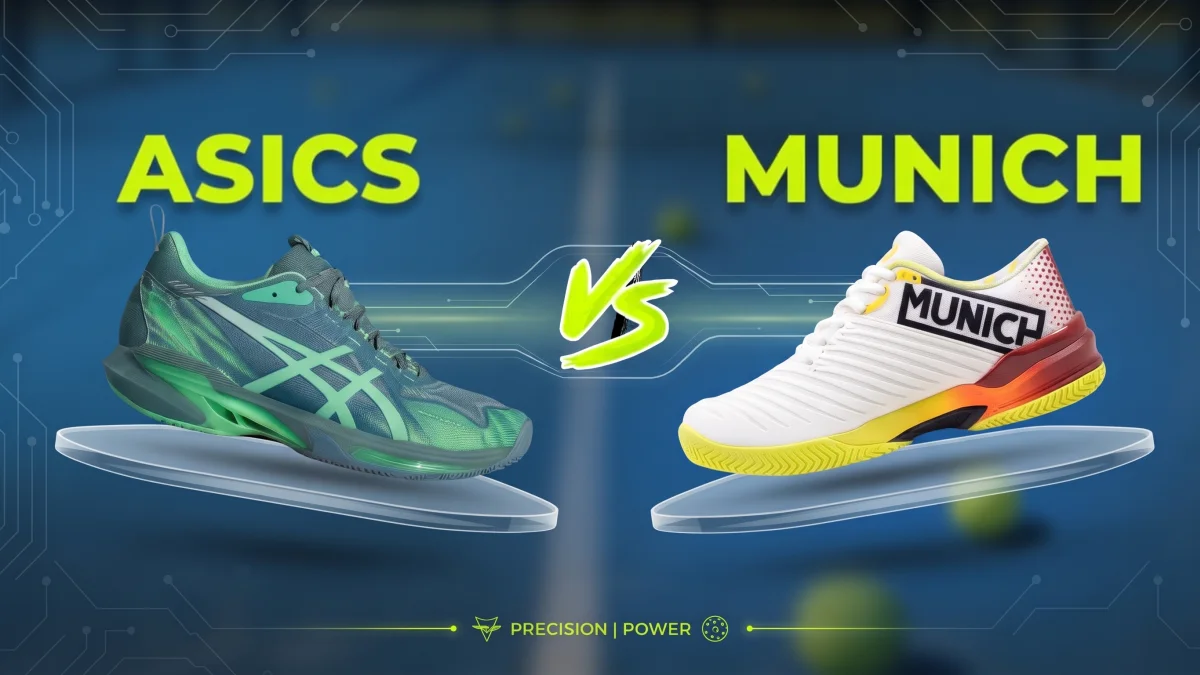
Choosing the wrong footwear to step onto the padel court can cost your body dearly. In a sport defined by explosive starts, hard braking, and constant changes of direction, your feet absorb intense impacts with every single point. This is precisely where footwear stops being a mere accessory and transforms into the central element of injury prevention. In today's market, two brands stand out clearly in the preferences of both amateur and professional players: the Japanese giant Asics and the daring Spanish brand Munich. But which one best suits your needs on the court?
Asics: The Gold Standard in Cushioning and Comfort
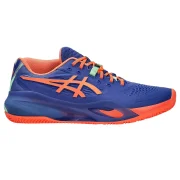
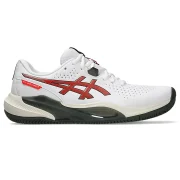
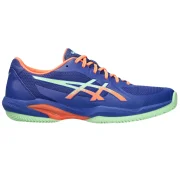
Asics has built an unshakeable reputation in high-competition sports, applying its vast running expertise directly to padel. The brand focuses on minimizing joint impact and is widely recognized by players who value long-lasting comfort during extended matches or demanding tournaments. Iconic models like the Asics Gel-Resolution have become undisputed benchmarks for the exceptional stability they provide in the midfoot area, while the Asics Gel-Dedicate offers an excellent, accessible alternative for those seeking durability without sacrificing lightness.
Standout Technologies: Gel and Lateral Stability
Asics' major differentiator lies in its gel cushioning technology strategically integrated into high-impact zones, such as the heel and metatarsal areas. This solution effectively dissipates the vertical energy generated by jumping during smashes. Concurrently, lateral stability systems — like the TRUSSTIC panel — prevent unwanted twisting of the midfoot when executing defensive lateral movements near the glass walls.
What Type of Player Are They Recommended For?
- Players who prioritize maximum shock absorption to protect their knees and back.
- Athletes with a history of plantar fatigue who need a smooth, cushioned stride.
- Regular practitioners (three or more times a week) who demand structural durability and breathable materials.
- Those who prefer a classic fit, ergonomically designed to adapt quickly to the natural width of the foot.
 Bestseller
 3.29

Munich: Innovation, Design, and Superior Resistance
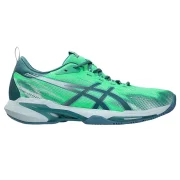
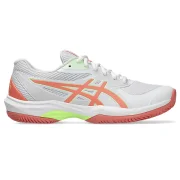
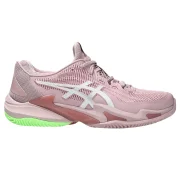
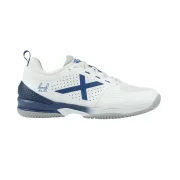
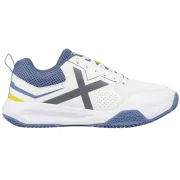
Originally rooted deep in futsal, Munich entered the world of padel with a bold proposition: blending an edgy, urban aesthetic with impressive mechanical robustness. It is a brand that has rapidly conquered aggressive players who spend hours on the court and demand maximum structural rigidity. Within the brand's catalog, the Munich Atom stand out for superior flexibility and immediate comfort, while the Munich Padel redefine the concept of resistance thanks to robust reinforcements in high-friction zones.
Sole Durability and Structural Reinforcements
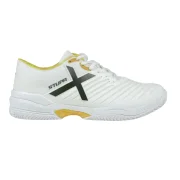
Munich padel shoes stand out for their reinforced toe caps and high-density rubber protections in areas subject to heavy friction with synthetic turf and sand. While many mid-range shoes wear out quickly on the inner side of the big toe due to dragging on the court surface, Munich relies on an armored shell that drastically extends the footwear's lifespan.
The Munich Player Profile
- Offensive players who perform explosive movements and need a firm, stable base.
- Athletes who rapidly wear down the toe cap or sides of their shoes due to their footwork on the court.
- Anyone who values a contemporary, distinctive design with a strong aesthetic personality.
- Players looking for a sole with exceptional immediate traction on synthetic turf with abundant sand.
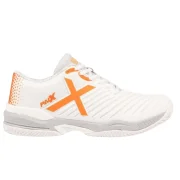
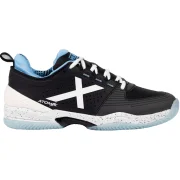
Direct Comparison: Asics vs. Munich
Beyond each brand's philosophy, your final choice should be based on how the footwear performs practically under real match conditions.
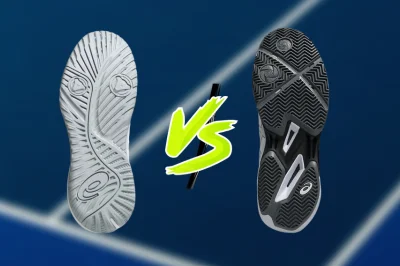
Grip and Sole Type (Clay vs. Omni)
The choice of sole determines your level of safety on the court. Both brands offer excellent options with a clay sole (espiga), considered the standard of excellence in padel for guaranteeing ideal traction without overly trapping the foot.
- Asics frequently relies on hybrid or micro-clay designs that facilitate smooth rotation when pivoting.
- Munich utilizes deep clay sole blocks that grip the sand firmly, ideal for courts where controlled sliding requires extra traction.
Price-Quality Ratio
In the top tier, prices for both brands align at similar levels. However, Asics gains an advantage in the variety of intermediate price ranges accessible to casual players, whereas Munich focuses its added value on extreme material longevity for intensive players.
Fun Padel Verdict: Which Should You Choose for Your Game Style?
The final decision between Asics and Munich comes down to your biomechanical profile and your game's priorities. If your main focus is relieving joint pressure, immediate comfort, and a lightweight stride feeling, Asics' technologies — complemented by iconic gel cushioning — remain an unbeatable choice in the market. Enjoy swift service with fast shipping across Europe and free shipping on orders over €99.
On the other hand, if your playing style is aggressive, featuring sharp stops and premature material wear due to high training frequency, Munich’s structural durability and robust reinforcements offer superior long-term resistance. Evaluate your foot width, the court surface at your regular club, and choose the brand that best supports every step toward victory.

Be the first to know what's happening in padel
Subscribe for gear guides, playing tips and the latest padel news — straight to your inbox.
 Iryna Mykhalchuk
 Vitalii Grigorovich
 Fast delivery: 1–2 business days
 The best prices on the web
 30 days to return the product
 Helpful customer support
