
 +351 963 509 874
 mail@funpadel.pt


 4.28
4.28
 Bestseller




Difference Between Padel and Tennis: The Ultimate Guide
 5 min
5 min
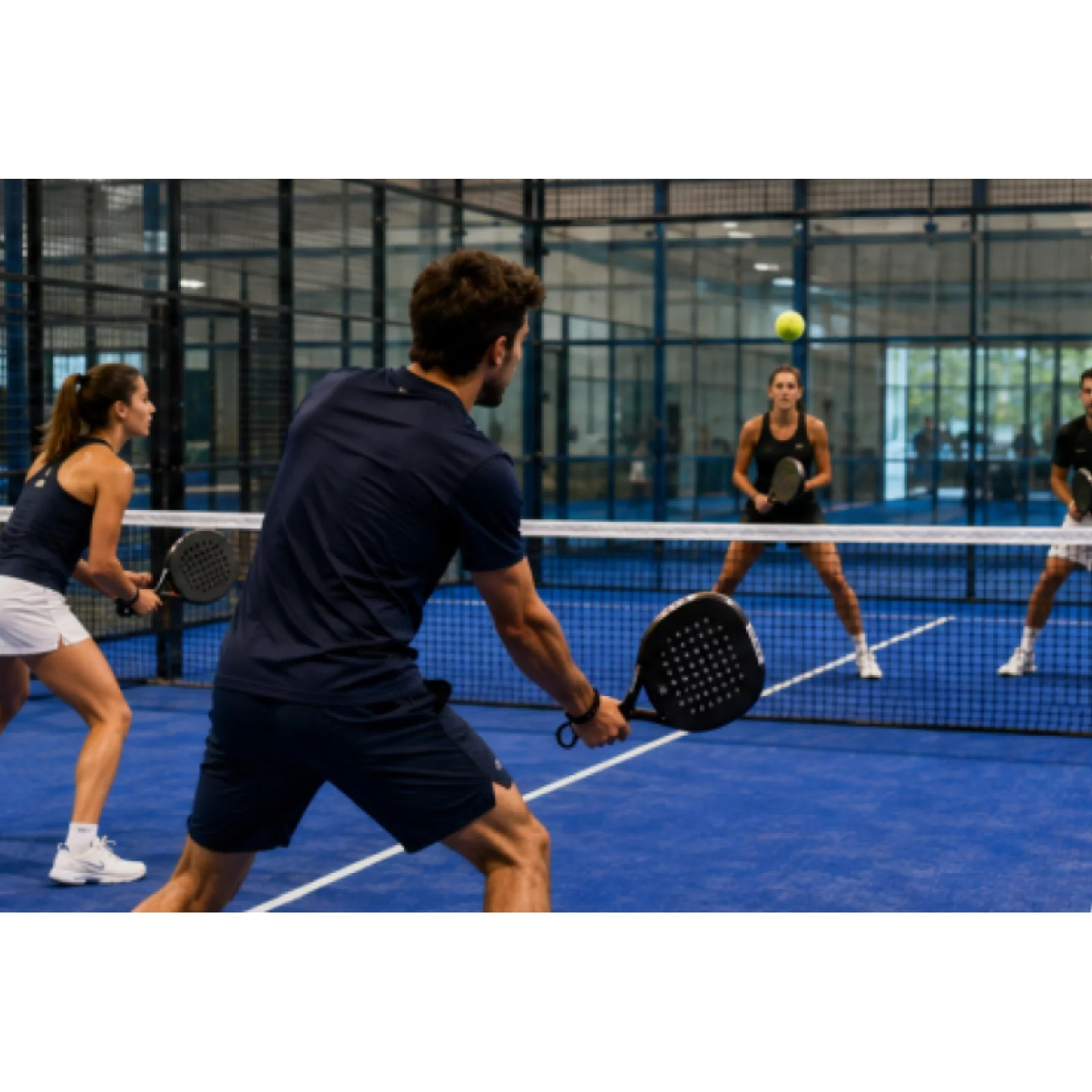
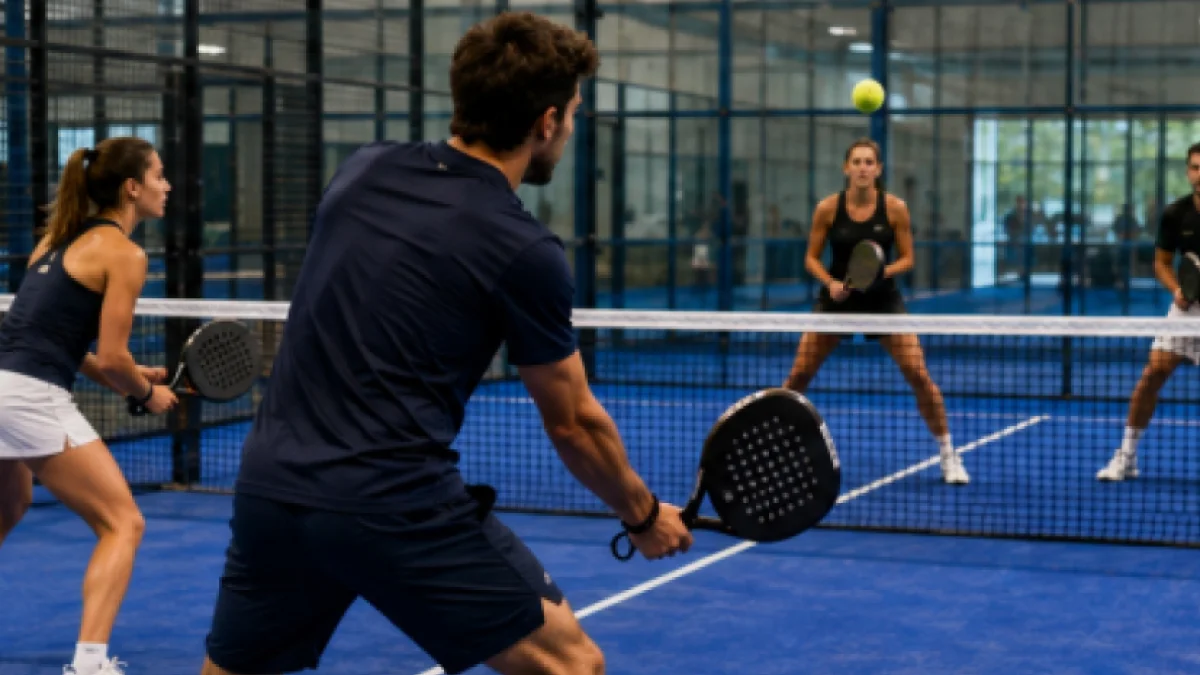
Understanding the difference between padel and tennis requires comparing the court, equipment, serve, technique, and strategy. Although they share a net, a ball, and a similar scoring base, each sport creates its own decisions.
In a comparison between padel and tennis, padel should not be presented as a reduced or simpler version of tennis. The walls, the doubles format, and the possibility of prolonging the point after the bounce alter the reading of the trajectory and the construction of the play.
Main differences
The difference between padel and tennis begins with the available space, the equipment, and how the point evolves. The most visible distinctions are:
- padel is officially played between two pairs on an enclosed court;
- tennis can be played in singles or doubles, without walls integrated into the game;
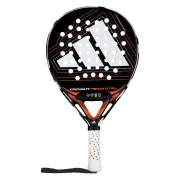
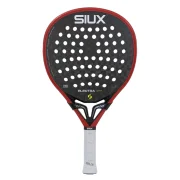
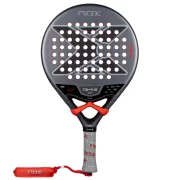
- the padel racket is solid and perforated, whereas the tennis racket has strings;
- the padel serve is executed after a bounce and at or below waist height;
- in padel, the walls can prolong the rally after the ball touches the ground correctly;
- technique and strategy require different preparations, positions, and movements.
These characteristics change the selection of shots. In tennis, depth and power can create space; in padel, control, the position of the pair, and the management of the bounce gain importance.
Court and use of walls
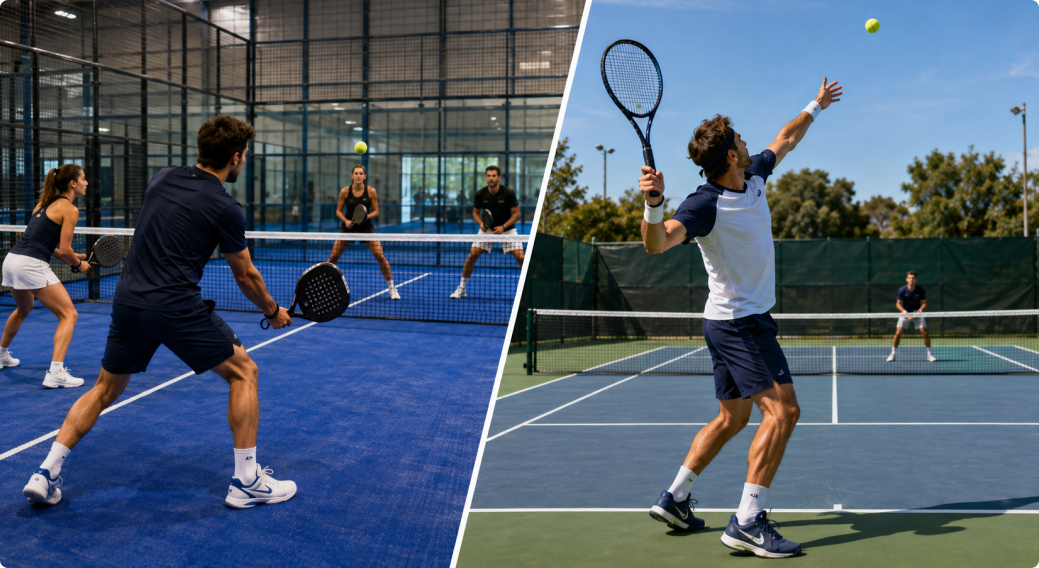
The padel court measures 20 by 10 meters and is enclosed by walls and metallic mesh. The tennis court measures 23.77 meters long and 8.23 meters wide in singles or 10.97 in doubles, without walls integrated into the game.
In padel, the ball sent by the opponent can touch a wall after bouncing correctly on the ground. It is then necessary to interpret the angle and return it before the second bounce. In tennis, a ball that falls outside the lines ends the point, without an enclosing surface to return it to play.
Rackets and balls
Equipment conditions technique. The padel racket is shorter, has no stringing, and features a solid surface with perforations; the tennis racket has a strung head, whose tension influences the response on impact.
The balls look similar and can have close weights, but obey their own dimensions and bounce specifications. Therefore, a padel ball should not be treated as equivalent to a tennis ball.
Padel racket
The padel racket favors a compact preparation and quick reactions near the net. Shape, weight, balance, core, and stiffness influence maneuverability and control. The strap attached to the wrist is mandatory during play.
Tennis racket
The tennis racket has a strung head and a handle that allows for greater reach. Head size, weight, balance, and string tension influence power, control, and spin, requiring a preparation adjusted to the stroke.
Serve and scoring system
In padel, the serve begins with a bounce on the ground and contact is made at or below waist height, diagonally. In tennis, the ball is tossed and hit before touching the ground, usually with an overhead motion and also directed toward the diagonally opposite area.
The base scoring uses 15, 30, 40, games, and sets in both sports. In padel, the current rules allow advantage, Star Point, or golden point; alternative methods also exist in tennis. The applicable format must be defined before the match.
Technique and movement
Tennis technique can resort to broader preparations, racket head acceleration, and topspin from the back of the court. In padel, the proximity of the walls favors compact gestures, blocks, volleys, lobs, and overhead shots to maintain an offensive position.
Movement also changes. Tennis requires covering a longer area and combining lateral, diagonal runs and advances. In padel, short steps, braking, quick changes of direction, and adjustments to let the ball reach the wall without disorganizing the pair are frequent.
Play near the net
In padel, conquering the net allows pressing and reducing the available angles for opponents. The pair must advance in a coordinated manner and protect the center. In tennis, approaching the net can be decisive, but the relevance of the option varies with the style and surface.
Defense at the back of the court
Defending at the back of the padel court implies deciding whether the ball should be played before or after the wall. Reading the bounce and recovering position are essential. In tennis, defense depends more on depth, height over the net, and response to the opponent's speed.
Physical demand and learning
Neither sport is automatically less demanding. Tennis may involve longer movements, overhead serving, and wider-amplitude strokes. Padel concentrates accelerations, braking, rotations, and lateral movements in a smaller space. Effort and intensity depend on the level, point duration, and playing style.
Initial learning of padel may seem accessible due to the serve after the bounce and the continuity offered by the walls. However, defending corners, interpreting trajectories, and maintaining position with the partner require practice. In tennis, adjusting contact distance and adapting to the stringing takes time.
Does tennis help play padel?
Tennis experience can help with coordination, reception, volleys, ball reading, and footwork adjustment. These bases facilitate adaptation, but do not guarantee an immediate transition to padel.
It is necessary to shorten some preparations, learn to use the walls, execute the serve using another technique, and build strategy with the partner. Seeking power in every shot or avoiding the wall bounce can limit control and defense.
Which sport to choose
The choice depends on the desired experience. Padel favors constant communication of the pair, wall management, and positional play. Tennis offers singles and doubles, a more extensive court, and a different relationship between speed, power, precision, and point construction.
It is important to consider court availability, equipment, type of effort, and preference for individual competition or continuous cooperation. Trying a lesson in each sport helps understand which intensity, environment, and learning process fit best, without assuming that one option is superior for everyone.

Be the first to know what's happening in padel
Subscribe for gear guides, playing tips and the latest padel news — straight to your inbox.
 Iryna Mykhalchuk
 Fast delivery: 2–3 business days
 The best prices on the web
 30 days to return the product
 Helpful customer support
